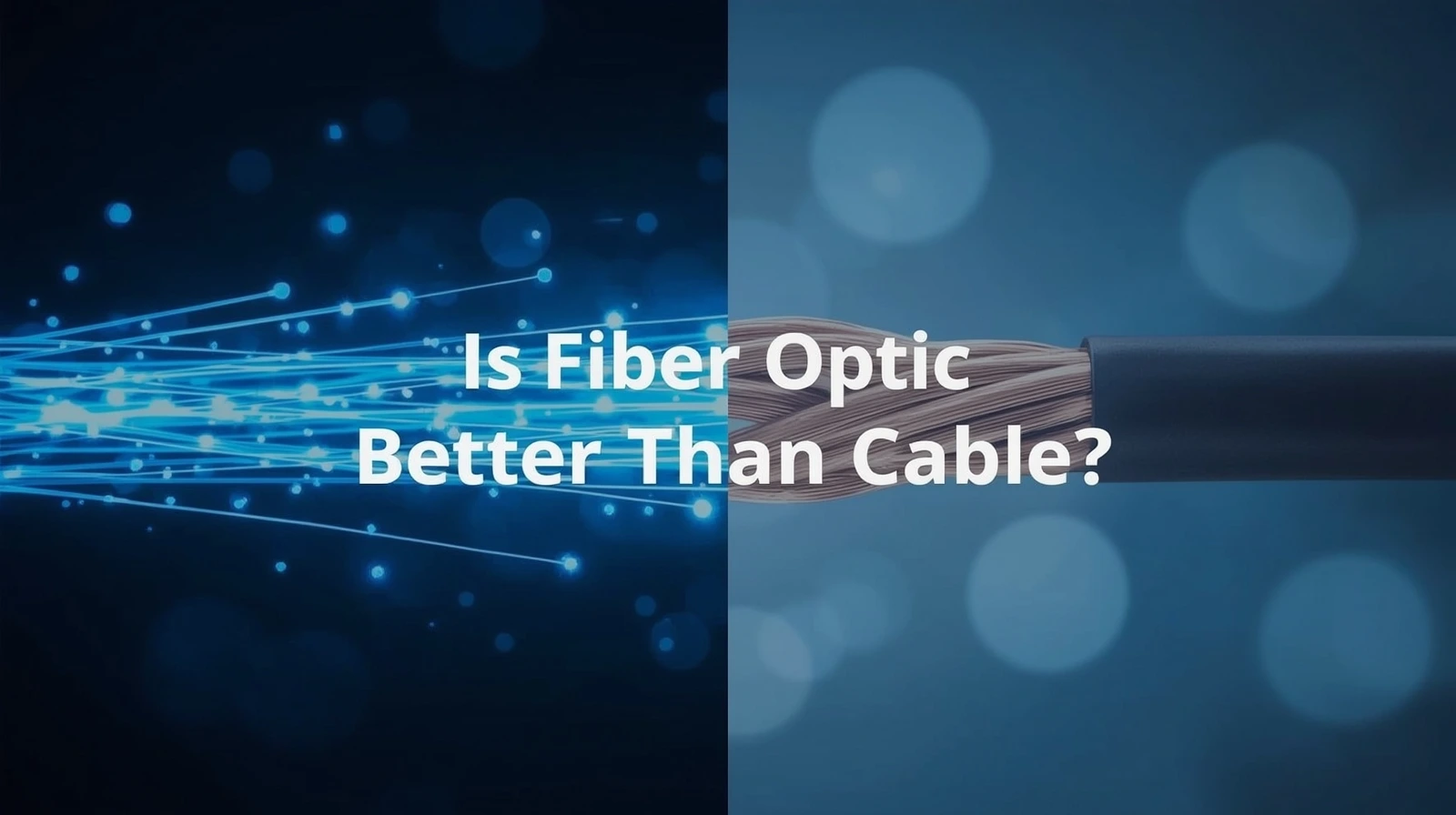
Yes, is fiber optic better than cable in almost every way. It provides faster speeds, more reliable connections, and better performance for homes and businesses. While cable internet can still serve basic needs, fiber optic internet outshines it when it comes to speed, stability, and long-term value.
Understanding Modern Internet Options
Every home, business, and device depends on the internet to stay connected. From video calls and online gaming to cloud storage and streaming, a fast connection is no longer a luxury it is a need. With several types of internet available today, two of the most popular are cable and fiber optic.
Cable internet has been around for a long time and uses the same coaxial cables that power cable television. It delivers data as electrical signals through copper wiring. Fiber optic internet, however, is a newer and far more advanced technology. It transmits data using light signals that move through thin strands of glass.
At first glance, both can give you high-speed internet, but when you look closely, they serve very different experiences. Fiber delivers a faster, more stable, and future-proof service, while cable often struggles during heavy usage. To choose the right one, it helps to understand how each system works and what makes them different.
What Is Fiber Optic Internet and How Does It Work
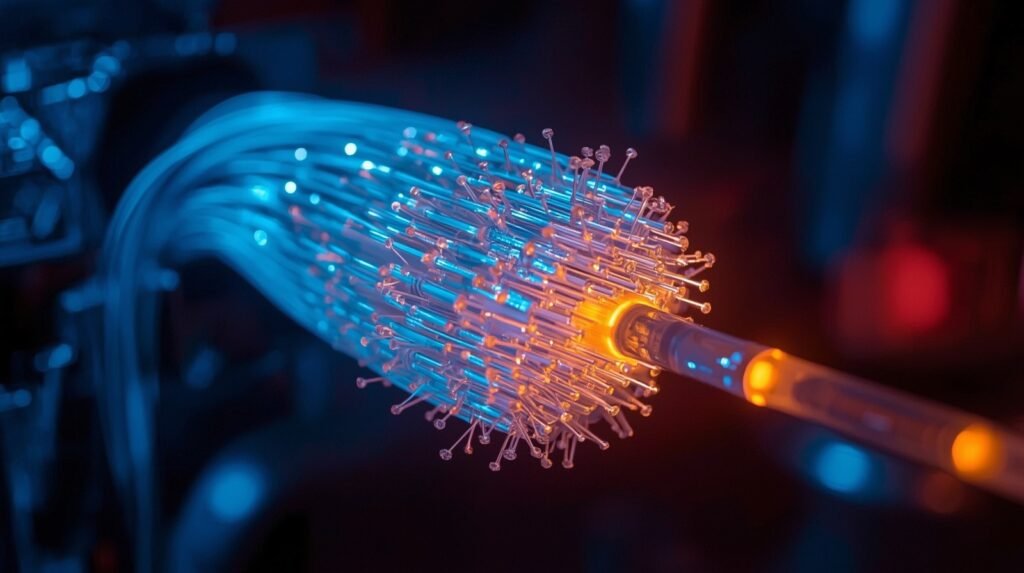
Fiber optic internet is often called the internet of the future and for good reason. It moves information through thin glass or plastic fibers by using light instead of electricity. These fibers are grouped into bundles known as cables, which carry signals across long distances with almost zero loss in quality.
When you use fiber internet, your service provider sends light pulses that represent digital data. The signal travels at nearly the speed of light, reaching your modem almost instantly. This gives you lightning-fast uploads, downloads, and streaming without interruptions.
Another major advantage is that fiber is not affected by outside conditions like weather or electrical interference. Traditional metal cables can lose performance during storms or due to signal overlap. Fiber lines, however, maintain a stable connection even under extreme network activity.
Businesses and large homes also love fiber because it can handle many devices at once without slowing down. Whether it’s video calls, smart TVs, or multiple users streaming at the same time, fiber keeps everything running smoothly.
What Makes Cable Internet Different
Cable internet has long been the most common connection type. It uses copper wires to transmit data through electrical signals. While it can still reach good speeds, it faces a few built-in limitations.
Since cable internet works through a shared network, the speed you get depends on how many people in your neighborhood are using it. During peak hours, such as evenings when everyone streams or games, performance tends to drop. This shared bandwidth can create delays, buffering, and lower-quality video calls.
Cable lines are also more sensitive to distance and environmental interference. If your home is far from the provider’s main hub, you might experience slower speeds or weaker signals. The upload speeds for cable are also much lower compared to fiber. That means if you work remotely, upload videos, or share large files, you’ll notice a big difference.
Cable is still useful for many users, especially in areas without fiber availability, but its limitations are becoming more visible as the world demands faster and more stable connections.
Is Fiber Optic Better Than Cable for Everyday Use
When comparing both options, fiber optic is better than cable for nearly all daily online tasks. It gives you faster streaming, clear video calls, instant file uploads, and smoother gaming experiences. The reason lies in how fiber sends and receives data it delivers equal upload and download speeds, known as symmetrical speeds.
With cable internet, you might have fast download speeds but slow uploads. For people who only watch videos, that might be fine. However, for anyone who uploads videos, backs up photos, or uses video conferencing, fiber makes a big difference.
Fiber also maintains speed consistency even when several devices are connected. You can stream a 4K movie while someone else is gaming and another person is on a video call, all without buffering. Cable internet usually can’t handle this level of multitasking without slowing down.
This is why so many households and businesses are switching to fiber it simply works better for the way people use the internet today.
Why Is Fiber Optics Better Than Cable for Speed and Reliability

Speed and reliability define a great internet experience, and this is where fiber leads by a wide margin. Because fiber transmits data through light signals, it can deliver speeds reaching up to 10 Gbps and beyond. This makes it ideal for both home and business use.
Cable, on the other hand, struggles to keep up. While cable internet can reach hundreds of Mbps, the speed often fluctuates depending on traffic and distance. Fiber stays consistent. You can download large files, stream high-quality videos, or host virtual meetings without any lag.
Reliability is another key advantage. Fiber lines are less likely to face signal degradation over time. Copper cables can corrode or pick up interference from nearby power lines, but fiber’s glass strands are immune to such issues.
In short, fiber’s structure allows it to maintain full performance, no matter how far the data travels. It’s also future-proof, which means it can handle upgrades in speed and capacity without replacing the main cables.
Cable or Fiber Optic for Internet: Which One Handles More Devices
The modern home is packed with devices smartphones, laptops, smart TVs, tablets, gaming consoles, cameras, and even smart refrigerators. Each one depends on strong internet to function properly.
Fiber internet is designed for this kind of environment. Because it provides higher bandwidth, it can easily support multiple devices running at once. You can stream music in one room, play online games in another, and attend a Zoom meeting all at the same time.
Cable networks, by contrast, have limited bandwidth. The more devices you connect, the more each one competes for available data. This often leads to slowdowns or buffering when several people are online together.
For busy families, small offices, or anyone running multiple smart devices, fiber’s ability to handle heavy traffic makes it the clear winner.
Fiber Optic Internet Pros and Cons
Pros of Fiber Internet:
- Extremely high speed and low latency
- Equal upload and download rates
- Works well with multiple users and smart devices
- Not affected by weather or interference
- Future-ready for higher data demands
Cons of Fiber Internet:
- Installation can cost more upfront
- Availability can be limited in rural or remote areas
Even with these minor drawbacks, fiber’s overall performance and long-term value make it worth the investment. As more areas get fiber coverage, it’s quickly becoming the new standard for high-speed connectivity.
Cable Internet Pros and Cons
Pros of Cable Internet:
- Widely available and easy to install
- Generally lower starting cost
- Uses existing TV cable lines
Cons of Cable Internet:
- Shared bandwidth causes slower speeds at peak times
- Upload speeds are much slower than download speeds
- More prone to signal loss and interference
- Long-term maintenance can be more frequent
Cable still works well for casual users, but as technology advances and internet demands grow, it’s becoming outdated compared to fiber.
Comparing Long-Term Value and Maintenance Costs
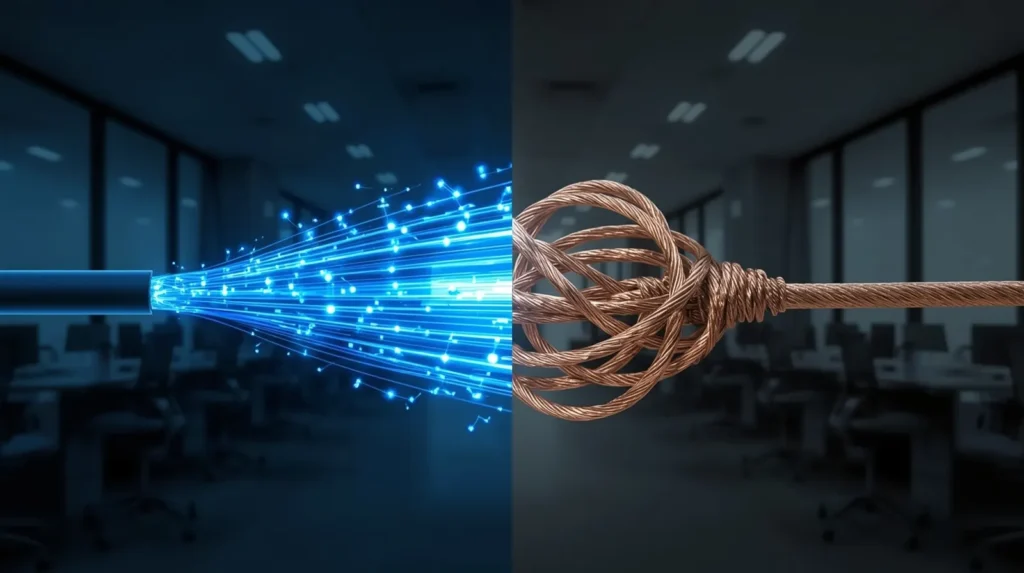
At first glance, fiber may seem more expensive. However, when you look at the bigger picture, it delivers better value over time. Fiber networks require less maintenance because the glass fibers don’t degrade easily. Copper cables, used in cable internet, wear out faster and need more repairs.
Fiber lines are also more energy-efficient. They transmit data faster using less power, which helps reduce operational costs for providers and users alike.
In business environments, faster internet means improved productivity. Uploading files, hosting meetings, or managing cloud applications all happen without delay. Even in homes, fewer interruptions mean less frustration and more enjoyment.
Cable might save you some money in the short term, but the steady performance of fiber makes it the smarter, longer-term investment.
Real-World Benefits of Switching to Fiber Optic cable in Dallas, TX
Many homeowners and businesses in Dallas are switching to fiber for one simple reason it works better. With so many people working remotely, attending online classes, and running cloud-based tools, internet speed and reliability matter more than ever.
In Dallas, fiber networks allow users to enjoy consistent performance without worrying about slowdowns during busy hours. A family can stream movies, play games, and video chat all at once with no lag. For local businesses, fiber supports high-speed transactions, online meetings, and data security with ease.
This upgrade also boosts property value. Homes equipped with fiber internet are seen as modern and future-ready. For business owners, it adds a professional edge by ensuring smooth daily operations.
Why Heritage Cabling Recommends Fiber Optic for the Future
Heritage Cabling has served customers with top-quality network installation and cabling solutions for years. The company has seen firsthand how fiber optic internet improves performance for homes and offices. With professional installation and reliable equipment, Heritage Cabling ensures every client experiences maximum speed and long-term stability.
Fiber technology represents progress. It connects people faster, supports modern communication systems, and prepares communities for future digital demands. That’s why Heritage Cabling continues to recommend fiber over cable for anyone upgrading their connection.
From consultation to installation, the team focuses on precision and reliability, giving every customer the confidence that their internet will always perform at its best.
Final Thoughts
The question of which is better, fiber or cable, has a clear answer. Fiber optic internet outperforms cable in speed, reliability, and efficiency. It’s built for the modern world, where high-quality streaming, online collaboration, and cloud use are part of everyday life.
Cable still provides a decent service in many areas, but it’s slowly being replaced by fiber as the gold standard. The benefits of switching include faster uploads, smoother video calls, and a connection that never slows down, even when everyone is online at once.
If you’re tired of lag, buffering, and unstable speeds, fiber is the right move. It’s an investment that pays off through better performance and long-lasting reliability.
Want to experience the difference a true high-speed connection makes? Contact Heritage Cabling today for professional fiber optic installation and expert guidance on the best network setup for your home or business.